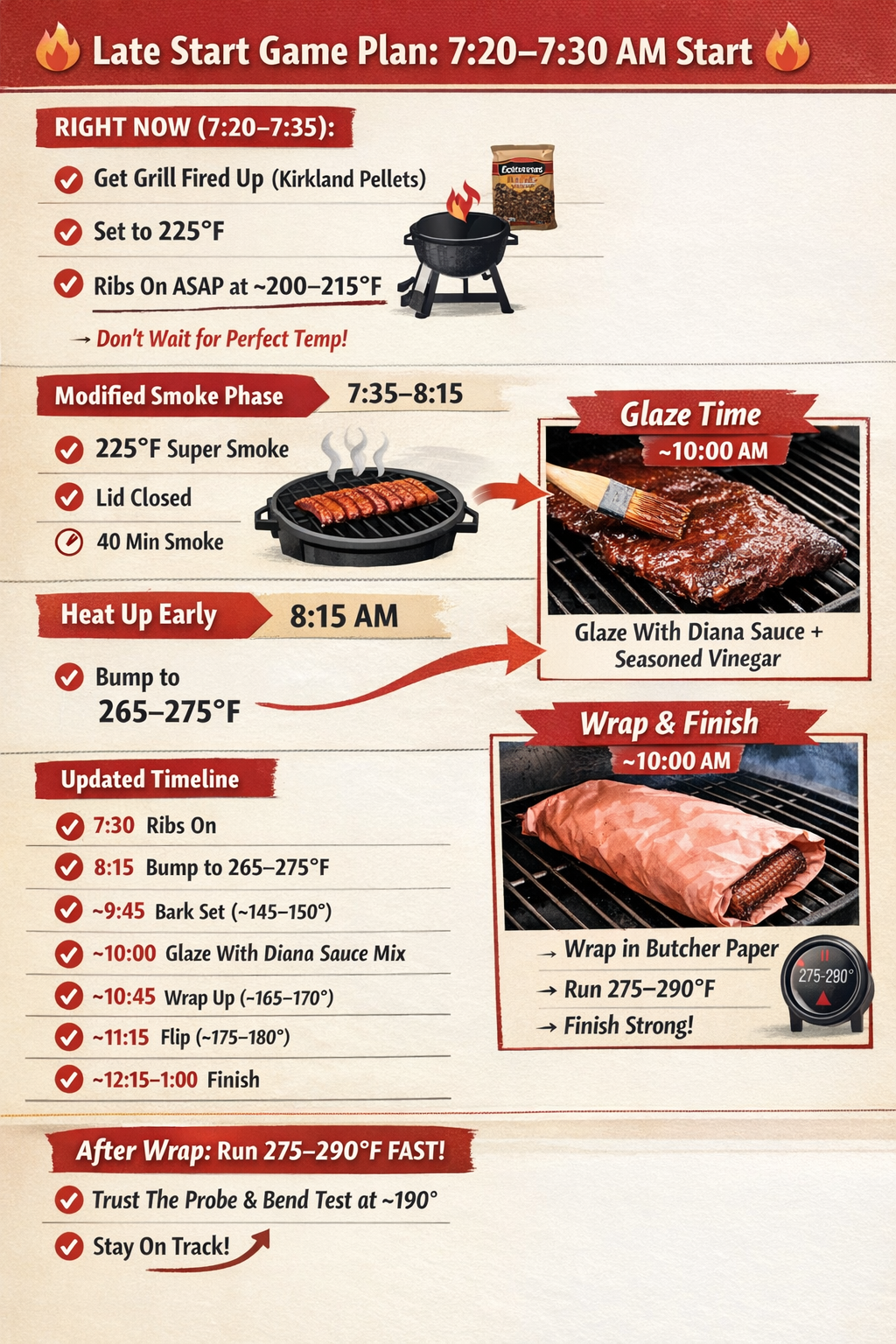
Derricks-Baby-Spare-Ribs-Compressed-Pitmaster-Runbook
🎛️ Core Execution Philosophy
- Smoke Adhesion First: A short 40-minute 225°F window locks in color and flavor without wasting morning time.
- Early Acceleration: Step up to 265°F–275°F early to force fast rendering and bypass the traditional morning drag.
- Aggressive Post-Wrap: Run 275°F–290°F to crush the stall and finish the meat decisively.
- Texture Over Numbers: Rely primarily on the surface bend test rather than just raw digital probe data.
📅 The Profile & Prep
- Target Timeline: 7:30 AM load time for a 12:15 PM – 1:00 PM finish.
- The Dry Rub: Paprika, garlic, pepper, and highly minimized brown sugar.
- The Glaze: A thin layer of Diana Sauce blended with vinegar and homemade seasoning.
- The Wrap: High-airflow pink butcher paper combined with a light coat of beef tallow.
⏱️ Master Timeline Snapshot
[07:30 AM] ── Ribs On (225°F / Super Smoke / Kirkland Pellets) [08:15 AM] ── Heat Step Up to 265°F–275°F (Lock in Bark) [09:45 AM] ── Bark Assessment (Looking for deep red / dry crust) [10:00 AM] ── Apply Light Custom Diana/Vinegar Glaze (Tack Phase) [10:45 AM] ── Wrap in Pink Butcher Paper + Light Tallow [10:45 AM] ── Accelerate Pit Temp to 275°F–290°F (Post-Wrap Push) [11:15 AM] ── Flip Rack Over (Even heat distribution) [12:15 PM] ── 🏁 Begin Physical Bend and Probe Testing
⚡ Execution Phase Checklist
1. Ignition & Load (7:20 AM – 7:35 AM)
- Fire pellet grill using Kirkland Signature Pellets set directly to 225°F.
- Load ribs immediately when ambient temp crosses 200°F–215°F.
- Do not waste time waiting for a perfectly stabilized baseline.
2. Smoke & Acceleration (7:35 AM – 8:15 AM)
- Keep the lid strictly closed for 40 minutes of uninterrupted smoke exposure.
- 08:15 AM: Bump the controller up to 265°F–275°F.
- Never let the cooker drag at low temperatures all morning.
3. Flavor Tacking & Wrap (9:45 AM – 10:50 AM)
- 09:45 AM: Verify internal temperature sits near 145°F–155°F with a set, non-sticky bark.
- 10:00 AM: Paint a highly minimal, paper-thin coat of your custom Diana/vinegar seasoning glaze.
- 10:45 AM: Encase tightly in pink butcher paper alongside a light splash of melted tallow.
- Zero brown sugar or sweet liquid baths are permitted inside this wrap.
4. Power Finish (10:45 AM – Done)
- Instantly escalate pit temperatures to 275°F–290°F right after wrapping.
- 11:15 AM: Flip the paper package over to prevent any bottom-side scorching.
- Crank the controller to 300°F if the internal temperature crawl begins to lag.
🧠 Physical Doneness Parameters
- The Probe Target: Look for values between 190°F and 203°F.
- The Feel Test: Ensure your thermometer slides into the meat with zero resistance like warm butter.
- The Bend Test: Lift the rack from the center with tongs; the meat surface must flex and show slight tearing.
🌬️ Windy Day Pellet & Consumption Management
- Keep Hopper Topped: Heavy wind forces the auger to run constantly; check levels every 90 minutes.
- Avoid Tunneling: Stir the pellets in the hopper during checks to prevent a hollow “burn pot vortex.”
- Position Defensively: Angle the grill exhaust downwind to prevent cross-drafts from blowing heat out of the chamber.
- Block the Wind: If using a thermal blanket, ensure it does not cover or restrict the factory air intake vents.
🔪 Slicing & Presentation Protocol
- The Rest: Leave the ribs wrapped in a warm environment (turned-off oven or empty cooler) for 20–30 minutes minimum to let juices stabilize.
- Flip to Slice: Place the rack bone-side UP on a clean cutting board so you can clearly see the angle of every bone.
- The Knife: Use a long, sharp slicing knife. Commit to single, smooth draw strokes rather than a sawing motion to prevent tearing the bark.
- Clean the Blade: Wipe the blade down with a damp cloth every 3–4 cuts to keep the rib faces looking pristine and free of debris.
🛑 Critical Pitmaster Safe-Guards
- Never Chase Ambient Fluctuations: Ambient shifts between 265°F and 285°F require zero corrective actions.
- If Running Behind Schedule: Wrap 5 degrees earlier (~160°F) and instantly anchor the pit at 300°F.
- If Bark Sets Dark Too Fast: Wrap ahead of schedule and temporarily ease the pit down to 260°F.